
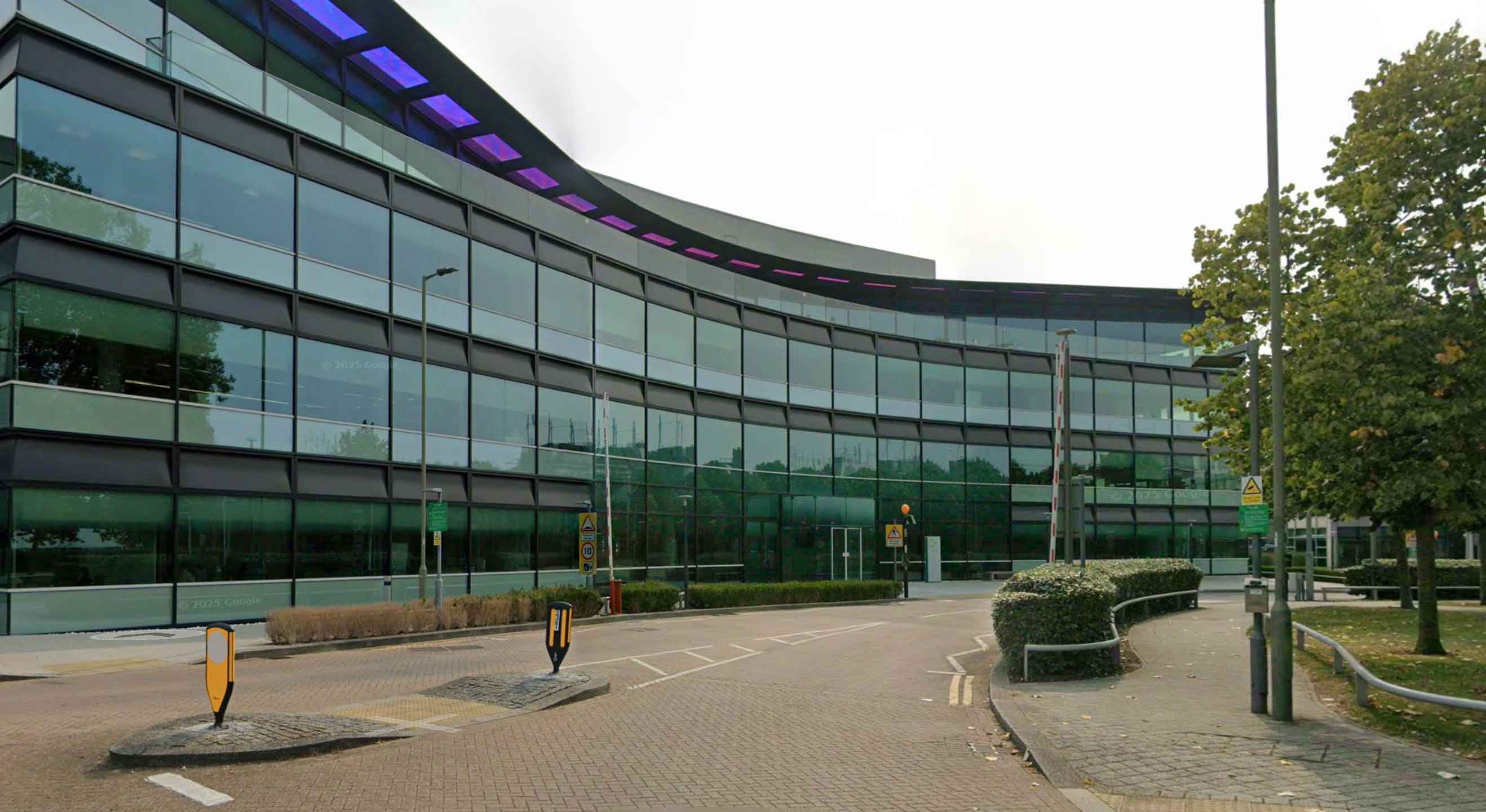
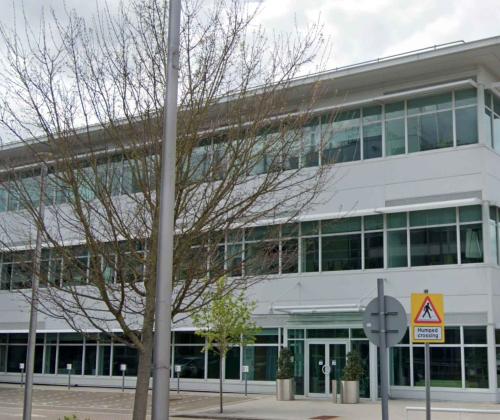
Building E Drainage Upgrade Structural Assessment - BP ICBT Sunbury
- Post-tensioned slabs
- Issue: PT tendons are critical to slab performance.
- Impact: Any strike or local tendon cut can trigger sudden capacity loss, significant repair cost, and programme risk.
- Penetration risk near tendons/rebar
- Issue: Proposed pipe penetrations and chases risked clashing with tendons, anchor zones or primary reinforcement.
- Impact: Incorrect positioning could weaken the slab, alter load paths, or induce cracking/deflection.
- Design coordination in a live building
- Issue: Aligning drainage routes with existing structure, services and ceiling zones in an occupied building.
- Impact: Needed buildable details and sequencing that minimised disruption and safeguarded users.
1) Comprehensive structural review
- As-built information: Collated and reviewed structural drawings/specifications to establish PT tendon layout, anchorage zones, slab depths and pour breaks.
- Capacity checks: Assessed the effect of proposed openings on shear, bending and punching capacities, including local edge distances and minimum web widths.
2) Penetration safety rules & “safe-zone” mapping
- Safe zones: Issued penetration-free exclusion zones around ducts and anchorage heads; defined allowable corridors for small cores and sleeves.
- Non-destructive verification: Recommended GPR scanning and cover-meter checks prior to each core to confirm tendon/rebar positions; agreed a permit-to-drill hold-point process.
3) Drainage route optimisation
- Design collaboration: Worked with the M&E engineers to re-route or offset pipe runs where clashes were identified, switching to soffit drops/locally boxed chases or shallower gradients where structurally advantageous.
- Detailing guidance: Issued edge distances, minimum clearances and sleeve diameters; specified no-cut zones near anchor heads and bursting-reinforcement regions.
4) Execution controls & site support
- Method & sequencing: Set out step-by-step drilling controls (pilot hole → GPR re-scan → core in increments), with stop rules if anomalies were detected.
- Quality assurance: Required as-scanned overlays to be marked on the soffit before drilling, engineer sign-off at hold points, and red-line as-builts after works.
- Contingency planning: Defined an emergency response in the unlikely event of a tendon exposure (isolate area, temporary propping, engineer inspection, repair plan).
- Drainage routes integrated without compromising the PT system, with clear safe-zone drawings and hold-point controls for the contractor.
- Reduced risk of tendon strikes through mandatory GPR verification and a permit-to-drill process.
- Constructability maintained in a live building, minimising disruption to occupants and operations.
Structural assessment · PT risk management · Safe-zone mapping · Penetration/route optimisation · Method statements & hold-points · Site support & QA
Expertise in Complex Structural Challenges
- Advanced Engineering Solutions: Skilled in addressing intricate structural issues through innovative engineering practices.
- Innovative Approaches: Utilises cutting-edge technology and methodologies.
Customised Solutions
- Tailored Designs: Solutions crafted to meet the specific needs of each project and client.
- Client Collaboration: Works closely with clients to understand their requirements and achieve desired outcomes.
Commitment to Quality
- Stringent Quality Control: Maintains high standards throughout project execution, from design to commissioning.
- Safety Focused: Prioritises safety in all aspects of design and implementation, adhering to the highest industry standards.
Need support on a similar project? Contact us to discuss your requirement.