
Tension Rod System Replacement - BP ICBT Sunbury
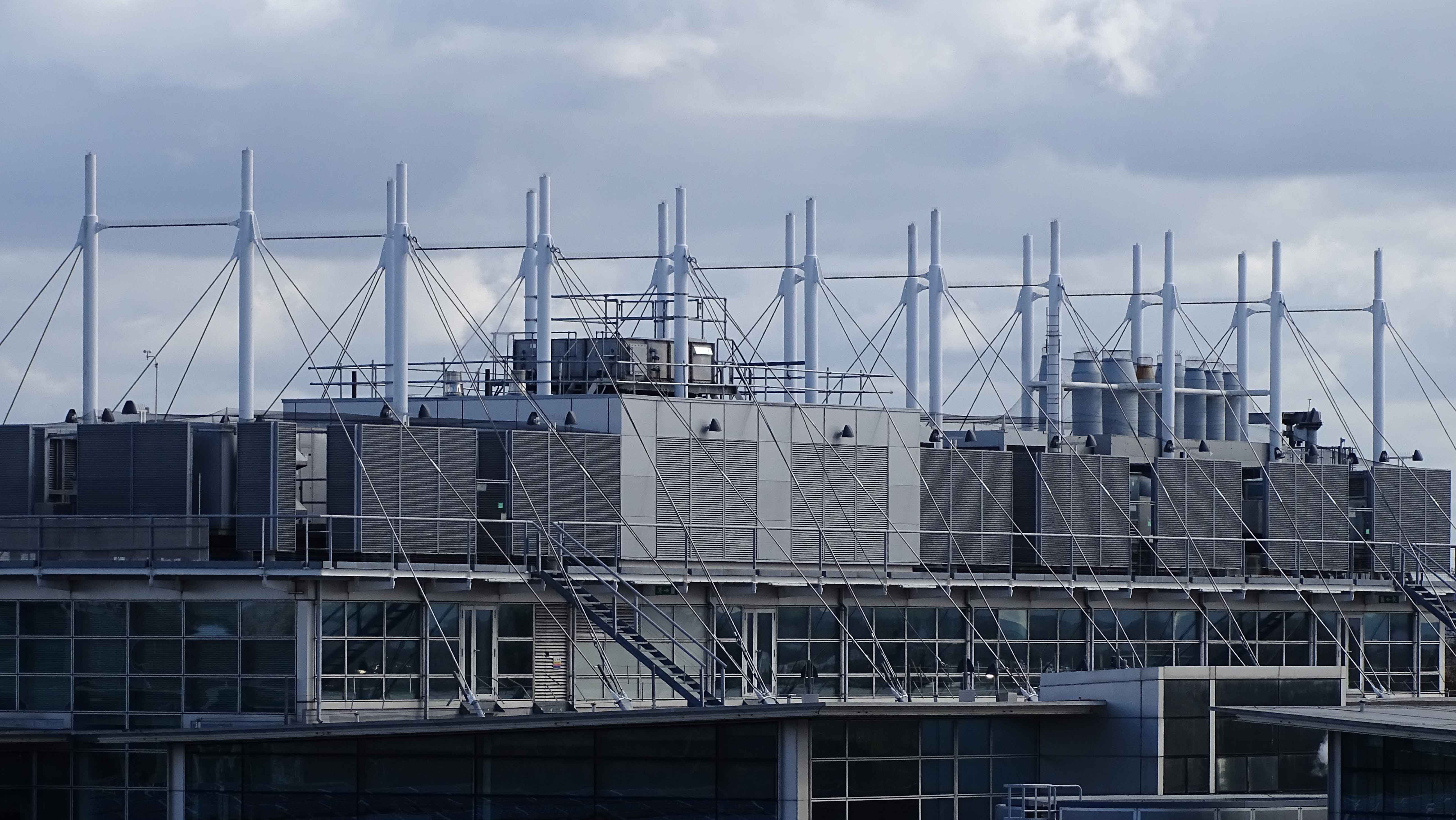
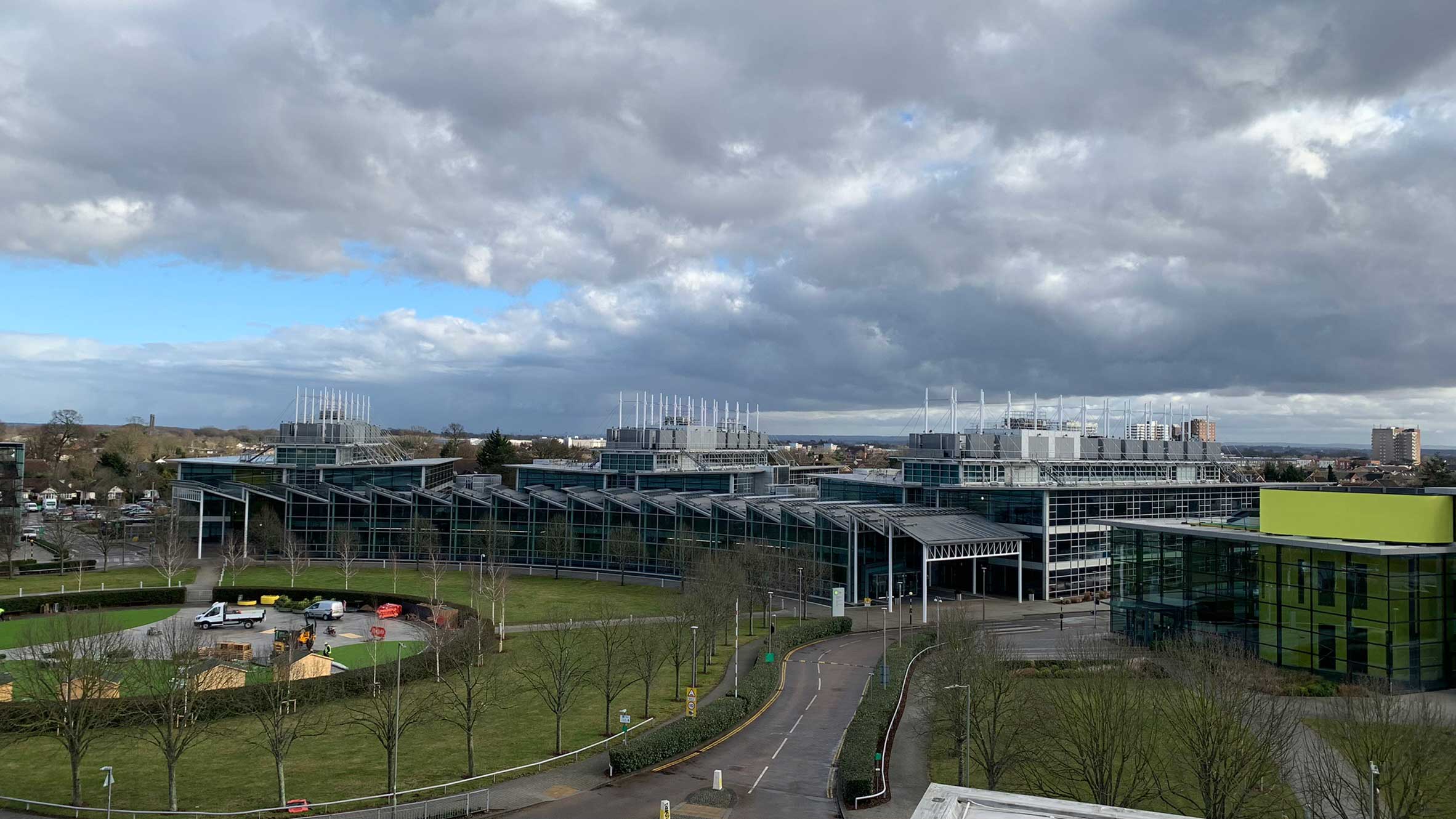
- Scope: Full like-for-like TRS replacement/adaptation across six buildings with live-site phasing
- Constraints: Existing steel frames, occupied buildings, access at height, weather exposure
- Controls: Hydraulic tensioning, load verification, survey set-out/total station alignment, hold-points & sign-off
- Deliverables: Design calculations & drawings, method statements/temporary works inputs, inspection & test plan (ITP), commissioning records, maintenance schedule
- Absence of maintenance & documentation
- Issue: No reliable history of inspections, materials or original design intent.
- Impact: Elevated uncertainty around residual capacity and connection detailing.
- Corrosion & degradation
- Issue: Couplers, fork-ends and exposed rods showed notable corrosion.
- Impact: Reduced load-carrying capacity and risk of brittle or fatigue-related failure.
- Structural risk under dynamic loading
- Issue: TRS is part of the global stability/racking resistance; wind loading is critical.
- Impact: Compromised rods could reduce overall frame stiffness and robustness.
- Design integration & constructability
- Issue: Replacement had to meet modern standards while respecting existing geometry (centre-to-centre distances, edge distances, anchorage).
- Impact: Required precise analysis, detailing and phased installation to keep operations live.
1) Comprehensive structural assessment
- Site inspections to confirm as-found geometry and connection conditions.
- Analytical checks of global stability and member actions with TRS replacement staged by bay.
- Risk register to manage unknowns (hidden corrosion, thread condition, embedment).
2) Custom-designed TRS replacement
- Bespoke rod assemblies sized to verified actions, with high-strength stainless steel for rods and fittings to suit exposure class.
- Compatible fork-ends/couplers and tuned adjustment lengths for installation tolerances and fine alignment.
3) Temporary works & sequencing
- Jacking frames/needle beams and local restraint to control movement during de-tensioning/re-tensioning.
- Live-site phasing to maintain operations and safe access/egress.
Controlled installation & precision tensioning
- Hydraulic jacks with calibrated gauges; load shackles/strain gauges for verification.
- Total station alignment and preload verification against the design set-points.
- Hold-points for inspection of threads, seating of fork-ends, pin installation and locking.
5) Rigorous QA & commissioning
- Inspection & Test Plan (ITP) with photographic records.
- As-built tension records and post-installation surveys to verify geometry and movement limits.
- Maintenance plan establishing periodic checks and re-tension triggers.
Materials & components
- High-strength stainless steel rods and fittings, grade selection to suit exposure and design actions).
- Matching couplers and fork-end connectors; stainless pins/retainers and isolation washers where dissimilar metals occur.
Design standards & load cases
- Eurocode 3 (BS EN 1993) for steel design; BS EN 1991-1-4 for wind actions on structures.
- Appropriate partial factors and serviceability checks for stiffness/deflection compatibility with the primary frame.
- Temporary works aligned to BS 5975 principles.
Installation techniques
- Hydraulic tensioning to prescribed set-points, with staged, symmetric loading to prevent twist or eccentricity.
- Survey control for rod line/level and fork seating; torque/tension correlation where applicable.
- Stress monitoring during tensioning using load cells/strain gauges to confirm performance.
Durability & service life
- Stainless selection and detailing for crevice/corrosion resistance; drainage and water-shedding details at end fittings.
- Service life expectation ≥ 25 years under appropriate installation, use and maintenance, referencing EAD 200002-00-0602 (Tension Rod Systems) for assessment principles.
Enhanced structural integrity
- Replacement TRS restores designed load paths and wind-stability performance across all six buildings.
Reduced whole-life cost
- Durable stainless components and a clear maintenance plan reduce unplanned interventions.
Risk mitigation & compliance
- Works brought the TRS up to current code expectations, with verifiable tension records and QA to support audit and future inspections.
Operational continuity
- Phased sequencing allowed BP to maintain operations with minimal disruption.
Condition survey & analysis · TRS design & detailing · Temporary works/method inputs · Hydraulic tensioning procedure · QA/ITP & commissioning · Maintenance planning
Expertise in Complex Structural Challenges
- Advanced Engineering Solutions: Skilled in addressing intricate structural issues through innovative engineering practices.
- Innovative Approaches: Utilises cutting-edge technology and methodologies.
Customised Solutions
- Tailored Designs: Solutions crafted to meet the specific needs of each project and client.
- Client Collaboration: Works closely with clients to understand their requirements and achieve desired outcomes.
Commitment to Quality
- Stringent Quality Control: Maintains high standards throughout project execution, from design to commissioning.
- Safety Focused: Prioritises safety in all aspects of design and implementation, adhering to the highest industry standards.
Need support on a similar project? Contact us to discuss your requirement.